

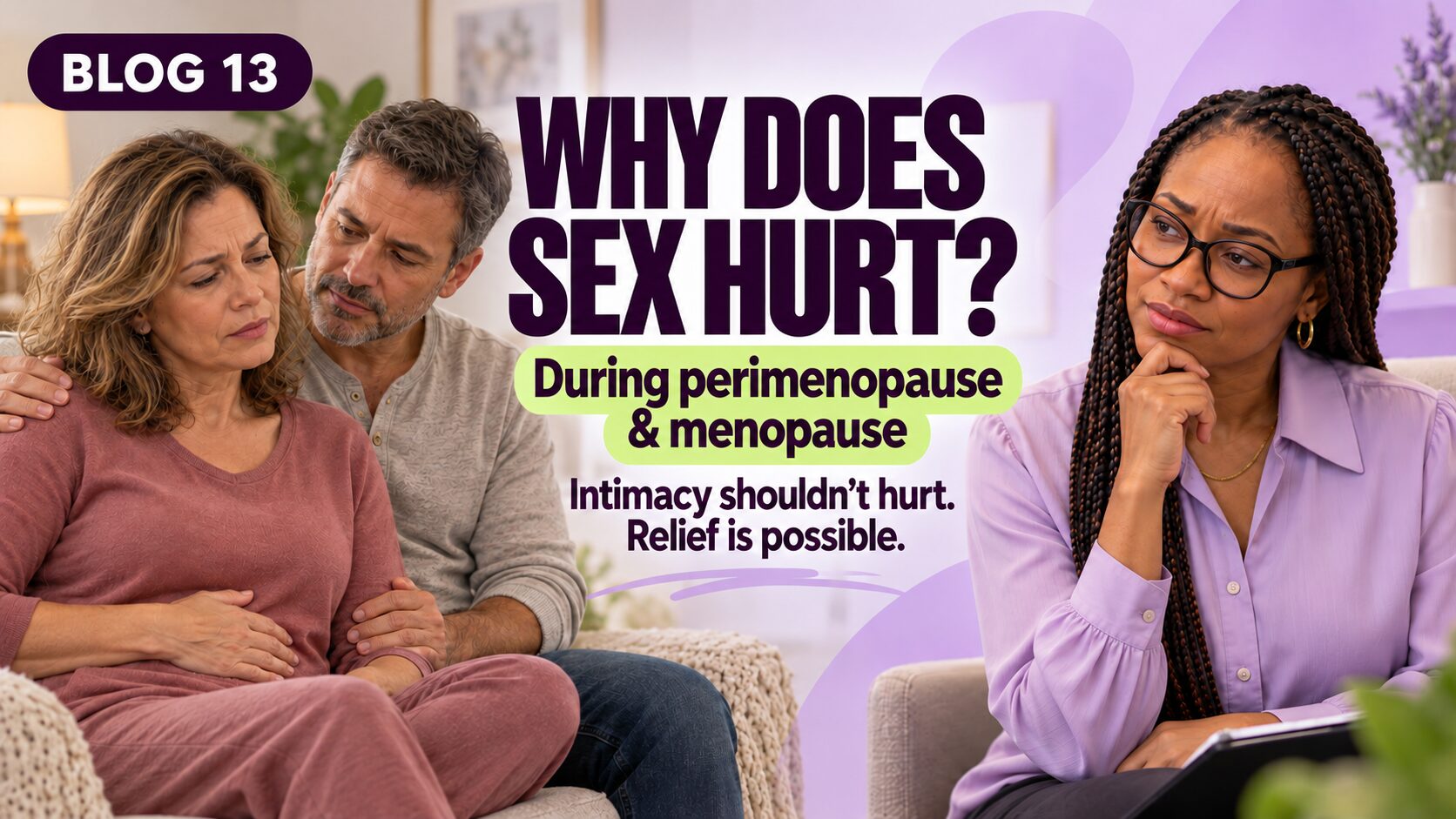
Has sex become uncomfortable or painful? Maybe you’re experiencing dryness, burning, or irritation. Perhaps you’ve even started avoiding intimacy because you’re worried it might hurt.
If this sounds familiar, you’re not alone.
Painful intercourse is common during perimenopause and menopause, but it isn’t something you have to accept as a normal part of aging.
There are real reasons behind these changes, and treatment options are available.

Why This Matters
Painful intimacy affects more than your physical comfort. It can impact your relationships, confidence, emotional well-being, and overall quality of life.
Many women hesitate to discuss these symptoms because they assume it’s simply part of getting older.
The good news? You don’t have to live with the pain.
Understanding what’s causing your discomfort is the first step toward finding relief.
A Patient Story: Finding Comfort Again
One patient came to me after years of painful intimacy.
Over time, she had quietly accepted that the discomfort was something she would have to live with. The pain had even created distance between her and her husband.
Together, we identified the underlying problem and developed a personalized treatment plan.
As her discomfort improved, she began to regain her confidence and reconnect with her partner.
“Fixing this fixed my marriage.”
Helping women feel comfortable, confident, and connected again is why I do this work.
What You Should Know
1. Hormonal Changes Affect Vaginal Health
As estrogen levels decline during perimenopause and menopause, vaginal tissues may become thinner, drier, and less elastic.
This is known as Genitourinary Syndrome of Menopause (GSM), sometimes called vaginal atrophy.
Unlike hot flashes, these symptoms often do not improve without treatment.
2. It’s Not Just About Dryness
Other symptoms can include:
- Burning or irritation
- Discomfort or tearing during intercourse
- Light bleeding with intercourse
- Frequent urinary urgency
- Recurrent urinary tract infections
These symptoms may be related to the same underlying hormonal changes.
3. Your Pelvic Floor May Be Involved
When intercourse becomes painful, your pelvic floor muscles may tighten as a protective response, making discomfort worse.
Childbirth, previous surgeries, and chronic pelvic pain can also contribute.
4. Other Medical Conditions May Contribute
Conditions such as lichen sclerosus, endometriosis, or other vulvar and pelvic disorders may also cause painful intercourse.
This is why a proper gynecologic evaluation is important.
5. Pain and Sexual Desire Are Connected
Hormonal changes, sleep problems, emotional stress, and physical discomfort can all affect sexual desire.
Addressing the underlying pain may help restore comfort and intimacy.
When to Talk to Your GYN
Consider scheduling an evaluation if you’re experiencing:
- ✓ Pain during intercourse, whether at entry or deeper inside
- ✓ Persistent vaginal dryness, burning, or itching
- ✓ Tearing or bleeding during or after intercourse
- ✓ Avoiding intimacy because of discomfort
- ✓ Changes in genital skin appearance or texture
- ✓ Frequent urinary urgency or recurring infections
- ✓ Any bleeding after menopause
Important: Any bleeding after menopause should always be evaluated by a healthcare professional.
How We Can Help
Every woman’s experience is different, which is why treatment begins with listening, understanding your symptoms, and identifying the underlying cause.
Depending on your evaluation, your personalized treatment plan may include:
Medical Treatment
Prescription therapies, including low-dose vaginal estrogen and other treatments, may help improve vaginal tissue health and relieve menopausal symptoms.
Your gynecologist will help determine which option is appropriate based on your medical history.
Pelvic Floor Therapy and Stimulation
Pelvic floor physical therapy may help relieve muscle tension, improve coordination, and reduce discomfort when pelvic floor dysfunction contributes to pain.
Specialized electromagnetic stimulation devices may be considered for certain pelvic floor concerns, although their effectiveness specifically for painful intercourse is not well established.
Vaginal Laser Therapy
Vaginal laser therapy is being studied for menopausal vaginal symptoms. However, evidence supporting its long-term safety and effectiveness remains limited, and it is not recommended as routine treatment.
Your gynecologist can discuss the potential risks, available evidence, and established alternatives.
Platelet-Rich Plasma (PRP)
PRP uses a concentrated portion of your own blood containing platelets and growth factors.
Although being studied for intimate wellness concerns, its effectiveness and long-term safety for painful intercourse have not been established.
Our goal is to understand what’s causing your discomfort and help you find an appropriate treatment plan that supports your quality of life.
Your Next Step: Let’s Talk About It
You deserve to feel comfortable, confident, and connected to your body at every stage of life.
If painful intercourse, vaginal dryness, or other menopausal symptoms are affecting your quality of life, we’re here to help.
You don’t have to keep putting up with pain.
Schedule an evaluation and take the first step toward feeling like yourself again.
SCHEDULE YOUR VISIT TODAY
The GYN Lounge
Personalized care for every stage of womanhood.
About the Author
Adanna Ikedilo, MD, FACOG is a board-certified OB-GYN with expertise in gynecologic and menopause care. She provides individualized care for women navigating perimenopause, menopause, sexual health concerns, and other gynecologic conditions.
This article is intended for educational purposes and does not replace individualized medical evaluation, diagnosis, or treatment.