

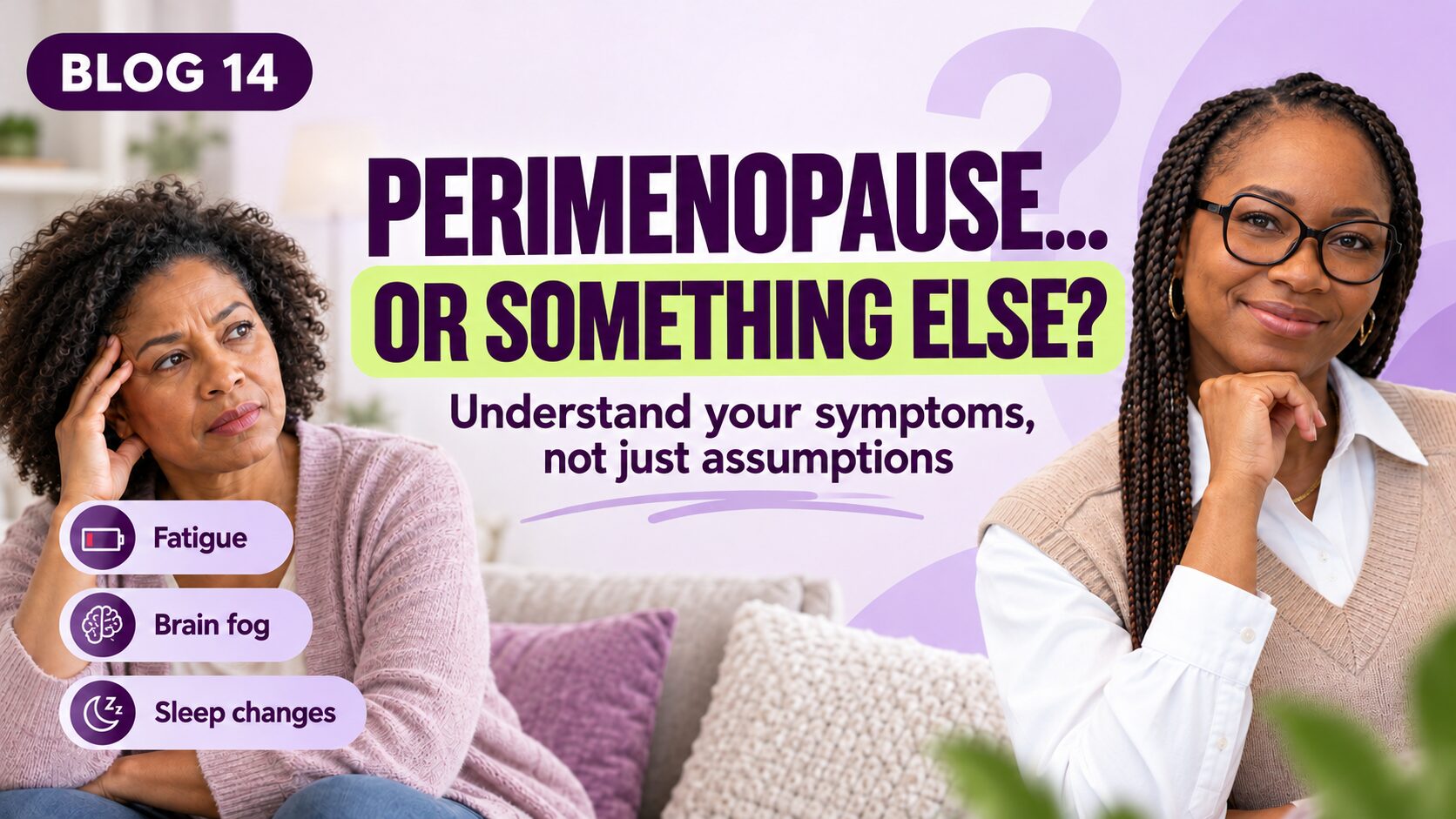
Are you constantly exhausted, feeling more irritable than usual, waking up at 3 a.m., or noticing changes in your menstrual cycle?
Maybe someone has told you, “It’s just menopause.”But what if something else is contributing to your symptoms? Not every symptom in midlife is caused by menopause.Perimenopause and menopause can cause a wide range of physical and emotional changes. However, thyroid disorders, anemia, sleep conditions, mental health concerns, and certain medications can cause similar symptoms.Understanding what’s really happening is the first step toward feeling better.

Why This Matters
When every symptom is blamed on hormones, other underlying health conditions can go undiagnosed.At the same time, many women struggle with menopause-related symptoms because they’ve been told to simply wait them out.Getting the right diagnosis means finding the right treatment.A comprehensive evaluation can help identify what’s causing your symptoms so you can stop guessing and start addressing the problem.
A Patient Story: Finding the Real Answers
One patient came to me convinced she was going through menopause.She was constantly tired, experiencing brain fog, and noticing unpredictable menstrual cycles.But after taking a closer look at her symptoms and medical history, we discovered that menopause wasn’t the only factor involved.Once we identified the different causes, we were able to create a treatment plan that addressed her needs.She told me something that stayed with me:“I just needed someone to tell me what was actually going on.”Sometimes, getting answers is the first step toward getting your life back.
What You Should Know
1. Perimenopause Can Begin Years Before Menopause
Perimenopause is the transition leading up to menopause. It commonly begins in your 40s, although some women experience changes earlier.Common symptoms include:
Irregular or changing menstrual cyclesHot flashes and night sweatsDifficulty sleepingMood changes or irritabilityBrain fog or difficulty concentratingVaginal drynessJoint aches
2. Menopause Is a Point in Time
Menopause is typically confirmed after 12 consecutive months without a menstrual period, when there is no other medical explanation.Although periods have stopped, symptoms such as hot flashes, sleep disturbances, and vaginal dryness may continue.
3. Other Conditions Can Mimic Menopause
Several health conditions may cause symptoms that resemble hormonal changes, including:
Thyroid disordersIron-deficiency anemiaVitamin deficienciesDiabetesSleep apneaDepression and anxietyMedication side effects
4. Hormone Testing Doesn’t Always Tell the Whole Story
Hormone levels fluctuate throughout perimenopause.A single blood test may not accurately reflect what’s happening in your body.Your menstrual history, symptoms, age, and overall health often provide more useful information.Your doctor may recommend specific tests to investigate other possible causes.
5. More Than One Condition May Be Involved
You can experience menopause-related changes while also having another medical condition.That’s why a comprehensive evaluation is essential.Your symptoms deserve more than assumptions. They deserve answers.
When to Talk to Your GYN
Consider scheduling an appointment if you’re experiencing:
✓ Hot flashes, night sweats, or sleep problems affecting daily life✓ New mood changes, anxiety, or brain fog✓ Heavier, longer, or unpredictable periods✓ Vaginal dryness or discomfort during intimacy✓ Urinary changes✓ Persistent fatigue or unexplained symptoms✓ Changes in menstrual cycles before age 45✓ Any bleeding after menopause
How We Can Help
At The GYN Lounge, we understand that every woman’s experience with menopause is different.Our approach focuses on identifying the underlying cause of your symptoms rather than assuming they’re all hormone-related.
A Comprehensive Evaluation
We begin by listening to your concerns, reviewing your medical history, and understanding your symptoms and menstrual patterns.
Personalized Testing
When appropriate, we recommend targeted laboratory tests or further evaluations to investigate possible underlying conditions.
Individualized Treatment
Depending on your needs, your treatment plan may include:
Lifestyle and wellness strategiesPrescription therapies for menopause symptomsTreatment of underlying medical conditionsReferrals to other specialists when necessary
Support Throughout Your Journey
Our clinical staff, nurse practitioners, and physician assistants work together to support your care.Our goal is to help you better understand your health, manage your symptoms, and improve your overall quality of life.
Your Next Step: Get the Answers You Deserve
You don’t have to keep wondering whether your symptoms are caused by menopause or something else.And you don’t have to wait until they become unbearable.Stop guessing. Start getting answers.Schedule an evaluation to understand what’s happening in your body and explore the care options available to you.SCHEDULE YOUR VISIT TODAYThe GYN LoungePersonalized care for every stage of womanhood.
About the Author
Adanna Ikedilo, MD, FACOG is a board-certified OB-GYN with expertise in gynecologic and menopause care. She provides individualized care for women navigating perimenopause, menopause, sexual health concerns, and other gynecologic conditions.This article is intended for educational purposes and does not replace individualized medical evaluation, diagnosis, or treatment.